
Search North Carolina Divorce Decree Records
North Carolina divorce decree records are public court documents kept by the Clerk of Superior Court in each of the state's 100 counties. These records hold the full case file for every divorce granted in North Carolina. The state vital records office also keeps divorce certificates dating back to 1958. You can search for a North Carolina divorce decree online through the eCourts portal, by mail, or in person at your local courthouse. This page covers how to find, request, and obtain a certified copy of any divorce decree filed in North Carolina.
North Carolina Divorce Decree Quick Facts
North Carolina Divorce Decree Sources
Two main offices hold divorce records in North Carolina. The Clerk of Superior Court in each county stores the full divorce decree file. This file has the complaint, the answer, any separation agreements, and the final judgment signed by the judge. The clerk keeps these records at the courthouse. You can visit in person or look up some case details through the North Carolina eCourts portal.
The North Carolina Vital Records office keeps divorce certificates. A certificate is not the same as a divorce decree. It only confirms that a divorce took place. It shows the names of both spouses, the date, and the county. The vital records office has certificates for divorces from 1958 to the present. You can order one by mail or in person at the office in Raleigh. The fee is $24 for the first copy. Each added copy costs $15 when ordered at the same time.
The Vital Records office is part of the North Carolina Department of Health and Human Services. It is at 1903 Mail Service Center, Raleigh, NC 27699-1900. The call center is open from 8:00 a.m. to 5:00 p.m., Monday through Friday, at 919-733-3000. In-person visits require an appointment, and the last slot is at 2:30 p.m. to meet daily processing deadlines.
For a screenshot of the North Carolina Vital Records divorce certificate ordering page, visit vitalrecords.nc.gov.
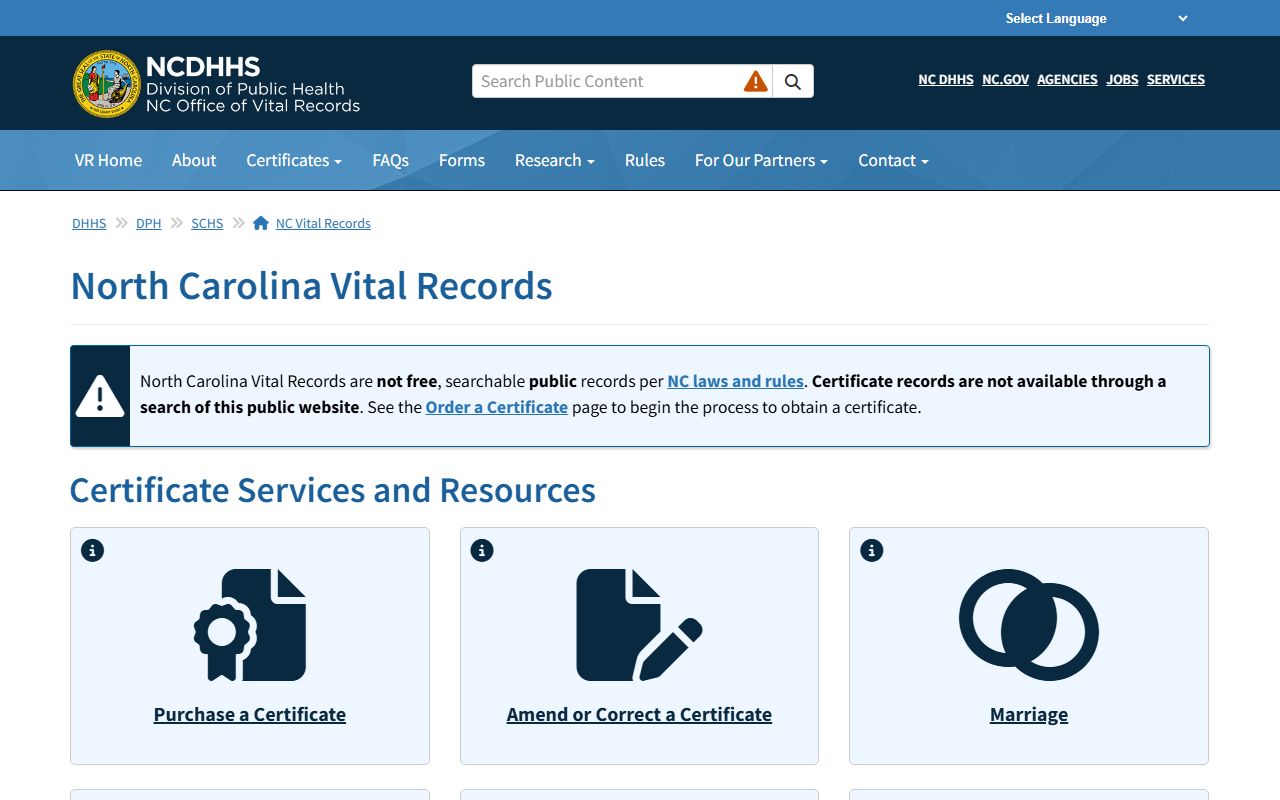
The vital records office handles certificates only. For the full divorce decree with all court orders and terms, contact the Clerk of Superior Court in the county where the case was filed.
Note: Divorce certificates contain less detail than a full divorce decree from the Clerk of Superior Court.
Search North Carolina Divorce Decree
North Carolina offers several ways to look up a divorce decree. Online access is the fastest method. You can search from home at any time. The NC eCourts portal provides access to civil court records across all 100 counties. Search by party name or case number. The system is free. It shows basic case details like party names, filing dates, and status. For copies of the actual divorce decree documents, you need to contact the county clerk or visit the courthouse.
The eCourts system is a good start for research. It does not provide complete case documents online for most counties. To get a certified copy of a divorce decree, you must go to the Clerk of Superior Court in the county where the divorce was filed.
To search for a divorce decree, you need:
- Full name of at least one spouse
- Approximate date of the divorce filing
- County where the case was filed
You can also search in person at any Clerk of Superior Court office in North Carolina. Staff can help find records and make copies. Most clerks charge per page. Certified copies cost more than plain ones. For divorce certificates only, mail your request to the NC Vital Records Section. Include names of both spouses, the date, the county, and your payment. Check processing dates before ordering to see current wait times.
North Carolina Divorce Decree Types
A divorce decree and a divorce certificate are two different documents. Many people confuse them. The divorce decree is the full court order. A judge signs it. It dissolves the marriage and may address property, support, and custody. This is the most complete record. It comes from the Clerk of Superior Court.
The divorce certificate is a shorter form from the NC Division of Public Health. It proves the divorce happened. It does not show settlement terms. Many people need a certificate for name changes or to remarry in North Carolina. You can get one by mail from the Vital Records Section in Raleigh.
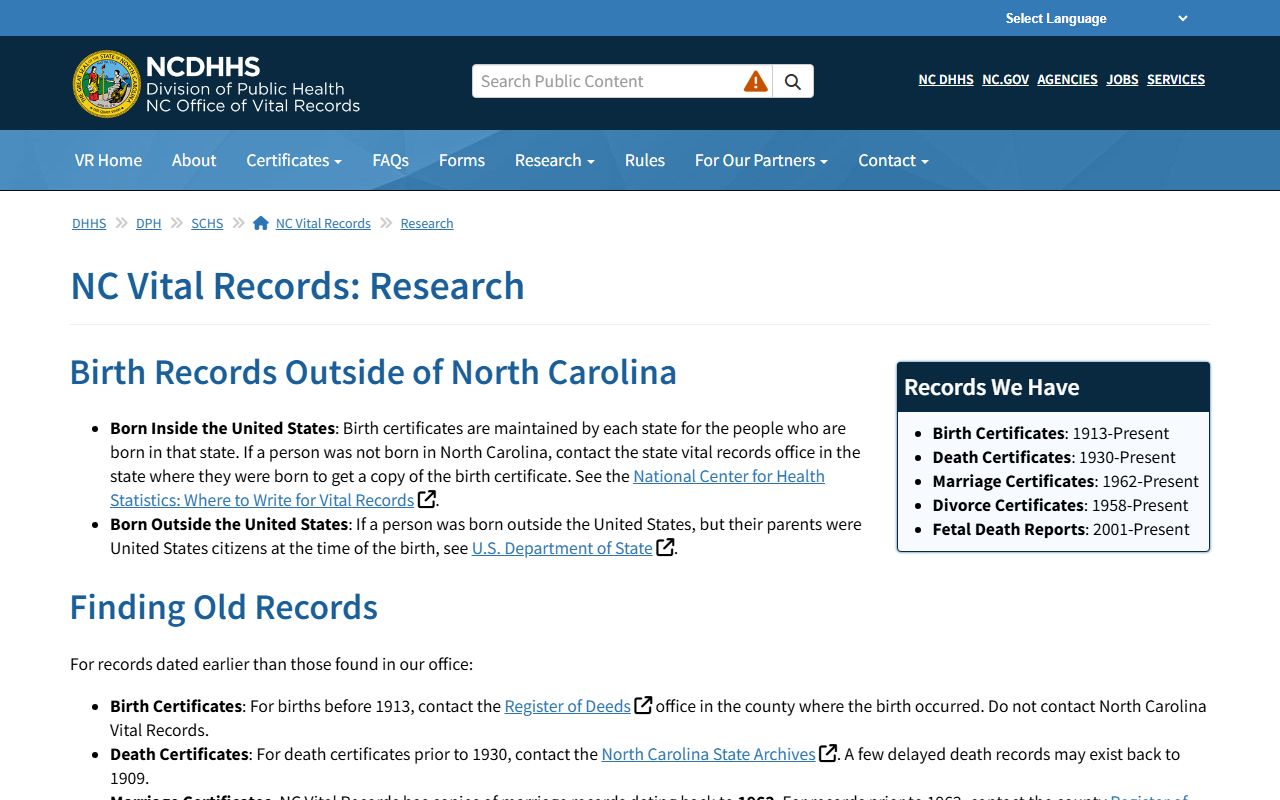
The NC State Library provides guidance on locating all types of vital records. For divorce records prior to 1958, contact the Clerk of Court in the county where the divorce was filed. The Vital Records research page explains where to find older records.
Court case files for a divorce decree in North Carolina typically contain:
- Full legal names of both spouses
- Date and place of the marriage
- Date the divorce complaint was filed
- Date the divorce decree was finalized
- County and court where it was heard
- Terms of property division if included
These documents show the full history of the case. You can get copies of any page from the Clerk of Superior Court in North Carolina.
North Carolina Divorce Decree Laws
North Carolina law sets the rules for divorce. Chapter 50 of the General Statutes covers divorce and alimony. These laws shape every divorce decree filed in the state. They set requirements for who can file, when they can file, and what the court can order.
Under G.S. 50-8, at least one spouse must have lived in North Carolina for six months before filing. This is the residency rule. You file in the county where either spouse lives. North Carolina is a no-fault divorce state. G.S. 50-6 requires spouses to live apart for at least one year before filing for absolute divorce. During this time, at least one spouse must intend for the split to be permanent. This is the only ground for absolute divorce in North Carolina.
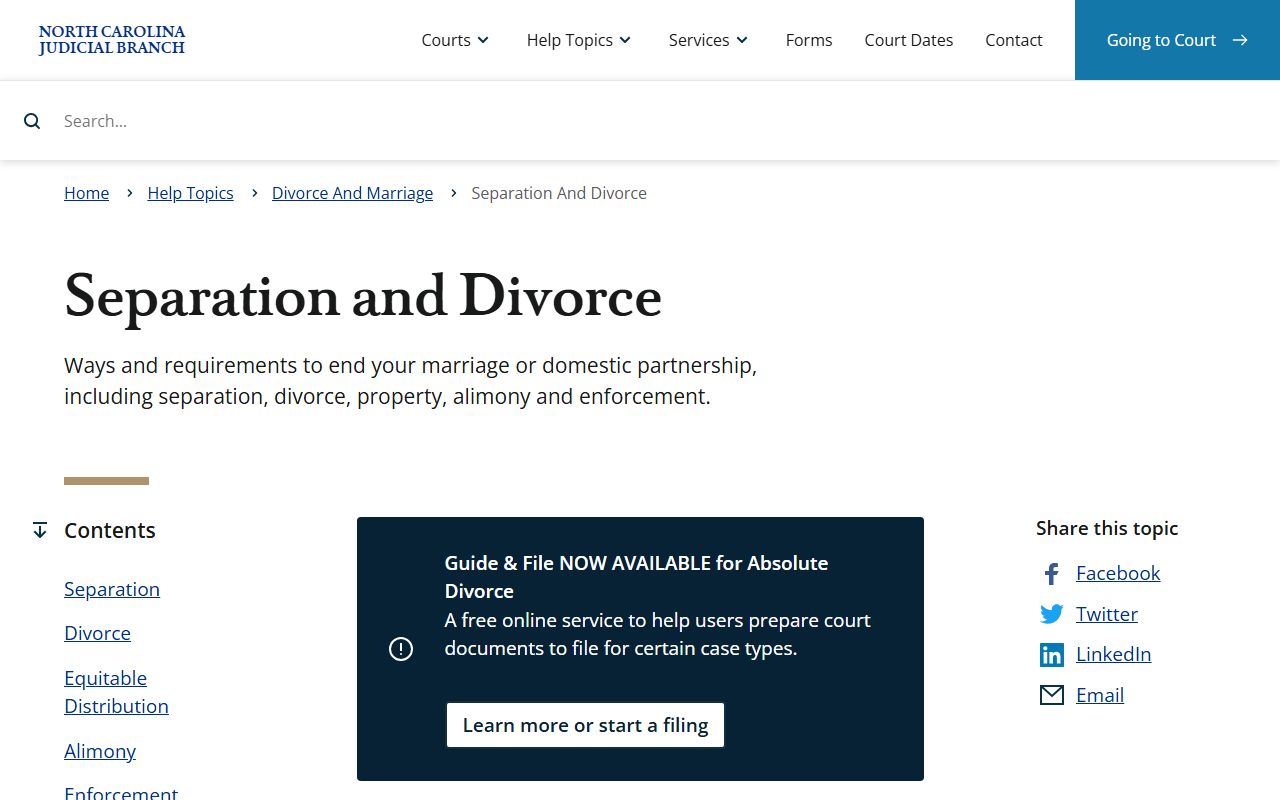
The NC Judicial Branch explains that legal separation does not require a written agreement. Spouses only need to live in different homes with at least one intending the separation to be permanent. A separation agreement is a private contract. It can cover bills, the marital home, and child custody. While not required, it helps resolve many issues before the divorce decree is entered.
Property division in a North Carolina divorce decree follows the equitable distribution model under G.S. 50-20. The judge divides marital property fairly. This does not always mean equally. Factors include the length of the marriage, each spouse's income, and contributions to the marital estate.
Alimony is governed by G.S. 50-16.3A. The court may order support if one spouse is dependent on the other. Marital misconduct can affect alimony awards. This includes acts like abandonment, cruel treatment, or reckless spending of income.
Note: Claims for property division and alimony must be filed before the divorce decree is entered, or those claims are waived.
Divorce Decree Fees in North Carolina
Fees vary based on what you need. The Vital Records office charges $24 for a divorce certificate search plus one copy. Added copies cost $15 each. Expedited service costs an extra $15 plus shipping. Mail requests should include a check or money order payable to NC Vital Records.
Filing a new divorce complaint costs $225 in most North Carolina counties. Getting copies of an existing divorce decree costs less. Clerks charge per page for copies. Certified copies cost more. Fee waivers are available for people who cannot afford the costs. You complete a Petition to Proceed as an Indigent form and show proof of financial hardship.
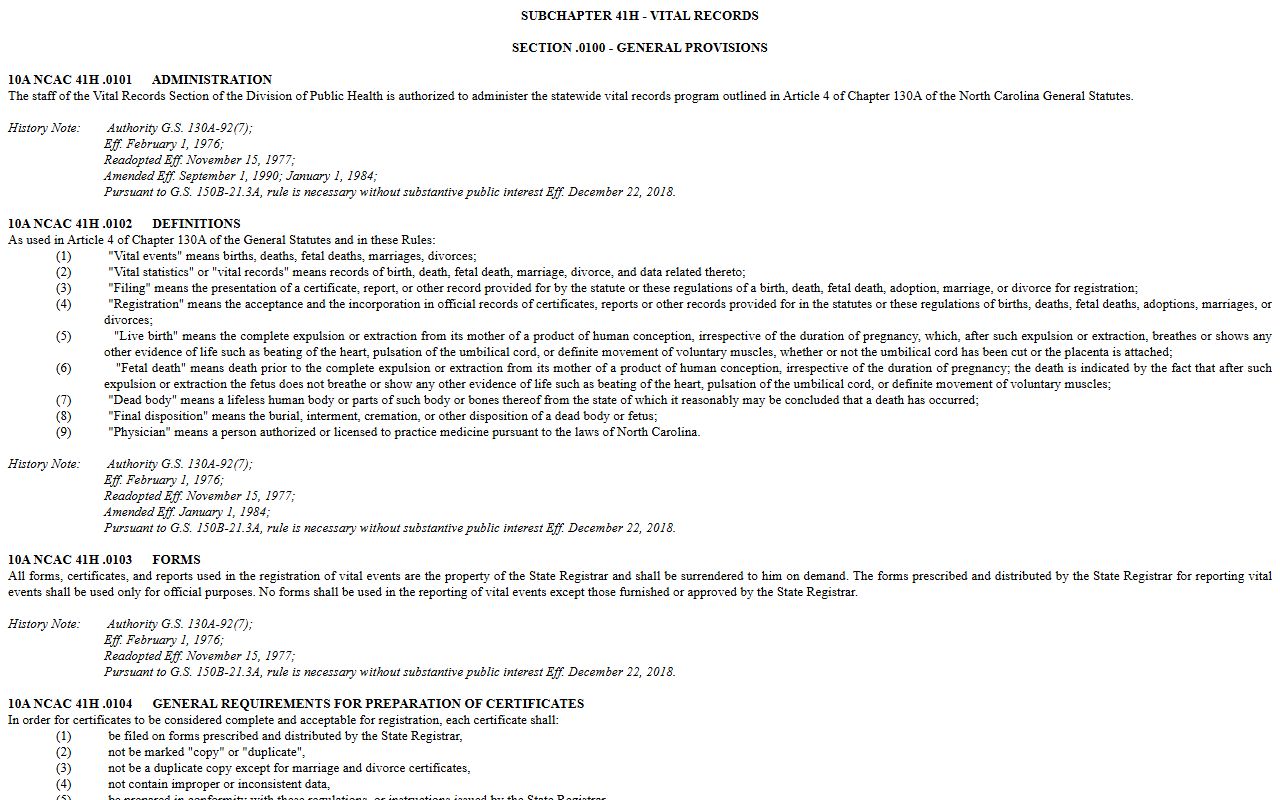
The NC Administrative Code sets the official fee schedule for vital records. The minimum information needed to locate a divorce record includes the name of the plaintiff or defendant, the date, and the place of divorce.
The Clerk of Superior Court in each county may have its own fee schedule for copies. Call ahead to confirm current rates before visiting.
North Carolina Divorce Decree Copies
You can get copies of a divorce decree in North Carolina in several ways. For the full divorce decree with all court orders, go to the Clerk of Superior Court in the county where the case was filed. You can request copies in person or by mail. Bring your ID. Know the names of the parties or the case number. The clerk can search and make copies for a fee.
For divorce certificates from the Vital Records office, you have two options. First, mail your request to the Vital Records Section, 1903 Mail Service Center, Raleigh, NC 27699-1903. Include the names of both spouses, date of divorce, county, and payment. Second, visit the office in person at 225 North McDowell Street in Raleigh. Appointments are required for in-person service, and slots fill up fast during busy periods.
Wait times vary. In-person requests at the Vital Records office are often processed the same day. Mail requests take several weeks. Court record requests depend on the workload at that county's clerk office.
North Carolina Divorce Decree Access
Yes. Divorce decree records are public in North Carolina. Under G.S. Chapter 132, citizens have the right to access government records. This includes divorce decrees held by the courts. Anyone can request to view them. You do not need to be a party to the case.
Some details may be redacted from public copies. These include Social Security numbers, financial account numbers, and details about minor children. A party can ask the court to seal records, but a judge must find good cause. Sealed divorce decree records are rare in North Carolina.
The NC Administrative Office of the Courts handles public records requests for court data. They do not hold case documents directly. For copies of a specific divorce decree, contact the clerk in the county where it was filed.
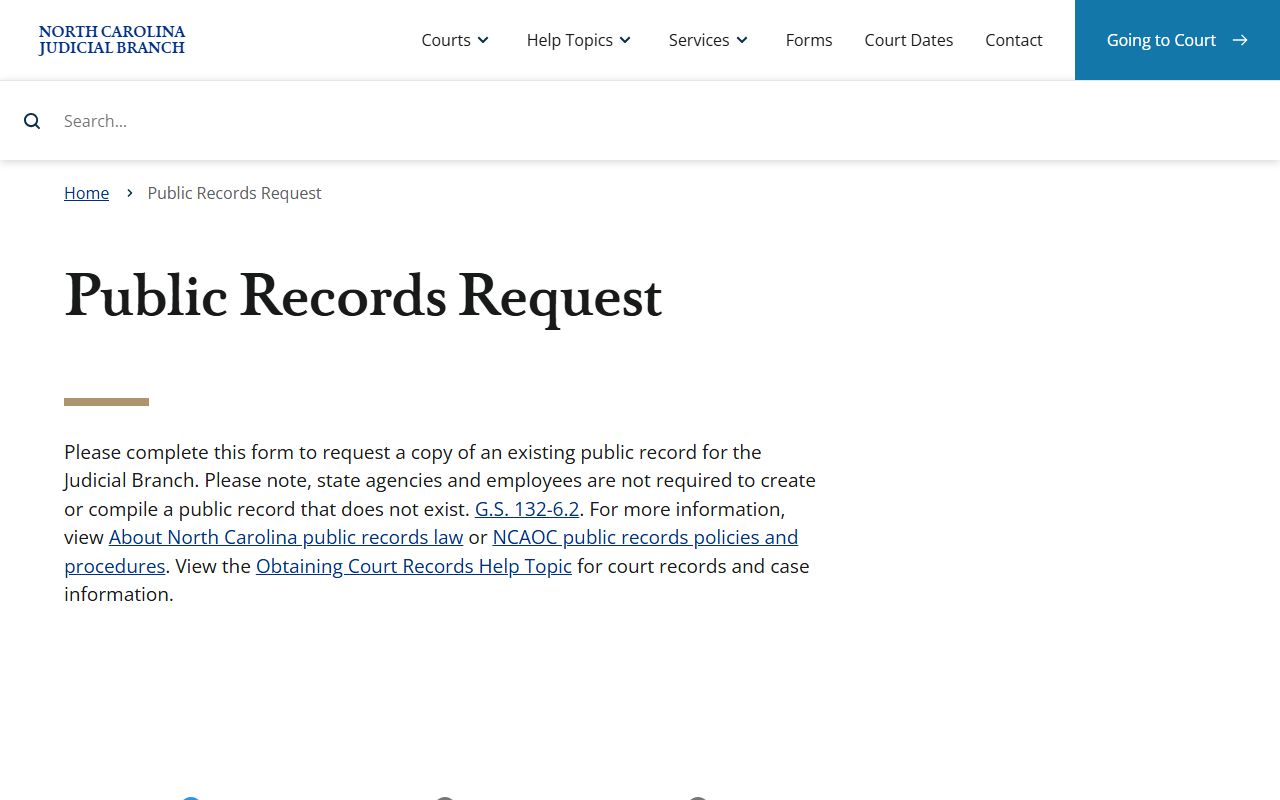
Note: The NC Administrative Office of the Courts does not conduct background searches or provide case documents directly.
Legal Help for Divorce in North Carolina
Legal Aid of North Carolina provides free legal help to people with low income. They handle family law cases including divorce across the state. Call the helpline at (866) 219-5262. They offer divorce form packets, help with form completion, and possible representation in complex cases.

The NC State Bar runs a lawyer referral service at 1-800-662-7660. They match you with a family law attorney in your area. The NC Judicial Branch at nccourts.gov has free forms and guides for people filing on their own. The Guide and File service helps users prepare documents for absolute divorce cases at no cost.
North Carolina Divorce Decree by County
Each county in North Carolina has its own Clerk of Superior Court that keeps divorce decree records. Pick a county below to find local contact info and resources.
Divorce Decree Records by City
Residents of major cities file for divorce at their county courthouse. Pick a city below to find divorce decree information for that area.