
Johnston County Divorce Decree Search
Johnston County keeps divorce decree records at the Clerk of Superior Court in Smithfield. The county sits just south of Raleigh in central North Carolina. Searching for a divorce decree in Johnston County starts at the courthouse on East Johnston Street. Clerk staff can pull your case file and make copies. Both current and older divorce decree records are stored at this location. Residents and non-residents can request these public documents from the Johnston County clerk office.
Johnston County Divorce Decree Office
The Johnston County Clerk of Superior Court manages all divorce decree files for the county. The office is at 207 E Johnston St in Smithfield, NC 27577. Every civil case filed in Johnston County is kept here. That includes all divorce decree documents signed by a judge. Staff can look up your case and provide copies on the spot.
Johnston County has grown fast in recent years. Towns like Smithfield, Clayton, Selma, and Four Oaks all fall under this one clerk office. No matter where you live in the county, your divorce decree is filed in Smithfield. Walk in with a photo ID and the name of one party to start. The clerk will search the system for your divorce decree. If the case is old, it may take a bit more time to pull from the archives. Most Johnston County divorce decree requests are handled the same day.
The Johnston County government site shown here provides contact details and hours for the clerk office where divorce decree records are kept.
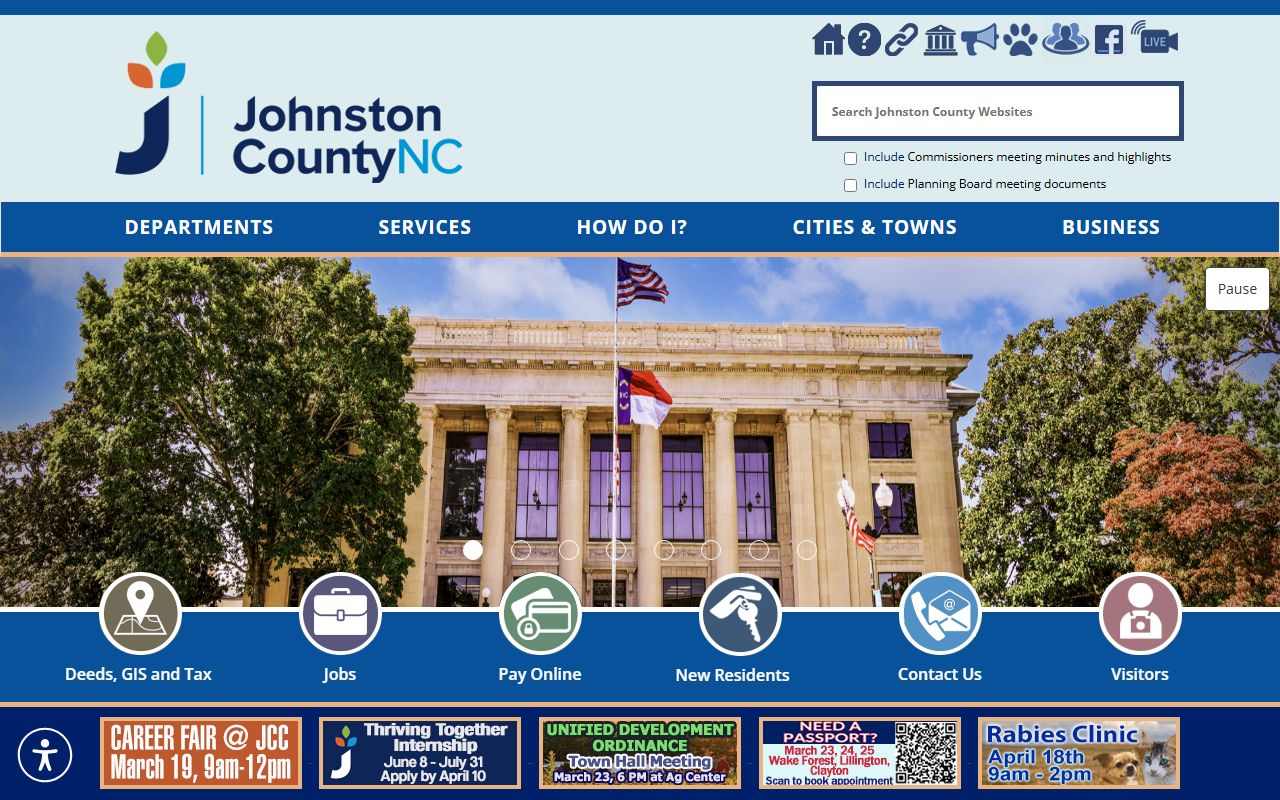
Visit the Johnston County website to check office hours before your trip to the courthouse in Smithfield.
| Court |
Johnston County Clerk of Superior Court 207 E Johnston St Smithfield, NC 27577 |
|---|---|
| Hours | Monday through Friday, 8:00 AM to 5:00 PM |
| Website | johnstonnc.com |
Find Johnston County Divorce Decree
You can search for a divorce decree in Johnston County in person or online. Each method has its own strengths. In-person visits give you access to the full court file right away. Online tools help you find basic case details from home. Both options are free for simple lookups in Johnston County.
The North Carolina eCourts portal lets you search civil case records across all counties. Type in the name of one spouse to find Johnston County divorce cases. The portal shows case numbers, filing dates, and party names. It does not display the full divorce decree text. For that, you need to contact the Johnston County clerk or go to Smithfield in person. Many people search online first and then visit the clerk to get the actual divorce decree.
To search for a Johnston County divorce decree, you will need:
- Full name of at least one spouse
- The year the divorce was filed or closed
- Case number if available
- Photo ID for certified copies
Mail requests also work. Send a letter to the Johnston County Clerk of Superior Court at 207 E Johnston St, Smithfield, NC 27577. Include the names of both spouses, the year of the case, and a check for copy fees. The clerk will mail your divorce decree copies back within a week or two. This is a good option if you live far from Smithfield.
Note: Older Johnston County divorce decree records may be stored off-site and could take extra time to retrieve.
Divorce Decree and Certificate in Johnston County
A divorce decree is not the same thing as a divorce certificate. They come from different offices and serve different needs. The divorce decree is the full court order. A judge signs it. It sits in the case file at the Johnston County clerk office. The decree has all the terms of the divorce. Property, custody, and support details are in the decree.
A divorce certificate is a short state form. The NC Vital Records office in Raleigh issues these. The certificate confirms that a divorce took place. It shows names, the date, and the county. It does not include details about property or children. The fee is $24 for one copy. Vital Records has certificates for divorces from 1958 on.
Most legal uses call for the full Johnston County divorce decree. Banks, courts, and real estate offices want the decree. A certificate may work for a name change or to prove you are no longer married. Know which one you need before you make your request in Johnston County.
Johnston County Divorce Decree Filing
Filing for divorce in Johnston County follows North Carolina state law. The process creates a permanent court record. Each step adds to the case file. The final divorce decree becomes part of the public record at the Johnston County clerk office in Smithfield.
North Carolina is a no-fault state. Under G.S. 50-6, spouses must live apart for one full year before filing. At least one spouse must have lived in the state for six months per G.S. 50-8. If either spouse lives in Johnston County, the case can be filed in Smithfield. The filing fee is $225. The clerk assigns a case number once the complaint is filed.
After filing, the other spouse must be served. This can be done by the sheriff, a private process server, or certified mail. Once service is complete, proof goes in the file. If the case is uncontested, the court can hear it fairly soon. The judge reviews the case and signs the divorce decree. That decree then becomes part of the permanent Johnston County court record.
Note: Claims for property division under G.S. 50-20 and alimony under G.S. 50-16.3A must be filed before the Johnston County divorce decree is entered. Missing this deadline means losing those rights.
Johnston County Related Records
The Johnston County Register of Deeds keeps marriage licenses and property records. These often connect to a divorce decree. A marriage license shows when the union began. Property deeds may change hands after a divorce decree splits assets. Both the clerk and the Register of Deeds are in Smithfield.
Public records in North Carolina fall under G.S. Chapter 132. This law makes most court files open to the public. A Johnston County divorce decree is a public record. You do not need a reason to view one. Anyone can walk into the Smithfield courthouse and ask for a copy. Some parts of a case file may have restricted access if they involve children or sealed matters. But the divorce decree itself is almost always open to the public in Johnston County.
The Johnston County courthouse also handles custody modifications, child support matters, and domestic violence orders. These can tie into a divorce decree case. If you need records from more than one case type, the clerk can search across all civil files for you in Johnston County.
North Carolina Divorce Decree Resources
The state provides several tools for people who need a divorce decree. The NC Vital Records office in Raleigh handles divorce certificates. Their address is 1903 Mail Service Center, Raleigh, NC 27699-1903. Certificates cover divorces from 1958 forward. For older Johnston County divorce decree records, the clerk in Smithfield is the only source.
Legal Aid of North Carolina provides free legal help to people with low income. They can assist with divorce paperwork and explain what a divorce decree means. The NC Courts divorce guide has forms and instructions for self-represented litigants who need to file or search for a divorce decree in Johnston County.
The Vital Records research page offers guidance on finding historical divorce records. This resource is helpful if you are looking for a very old Johnston County divorce decree that predates modern record systems.
Divorce Decree Help in Johnston County
Not every person needs a lawyer to get a divorce decree in Johnston County. Simple cases with no children and no shared property can move fast. The court has self-help forms on the NC Courts website. Clerk staff in Smithfield can point you to the right forms. They cannot give legal advice, but they can guide you through the filing steps.
For complex cases, a family law attorney is a wise choice. The NC State Bar runs a lawyer referral line at 1-800-662-7660. They can match you with an attorney who handles Johnston County divorce decree cases. Property disputes, custody fights, and alimony claims all benefit from legal counsel before you pursue a divorce decree in Johnston County.